
Integration ServicesAPI strategy, orchestration, data movement, workflow connectivity, and integration operations
 Versionz Cloud Services
Integration Services
Versionz helps organizations design and deliver integration services across APIs, messaging, workflows, data movement, orchestration, and operational monitoring so systems work together reliably.
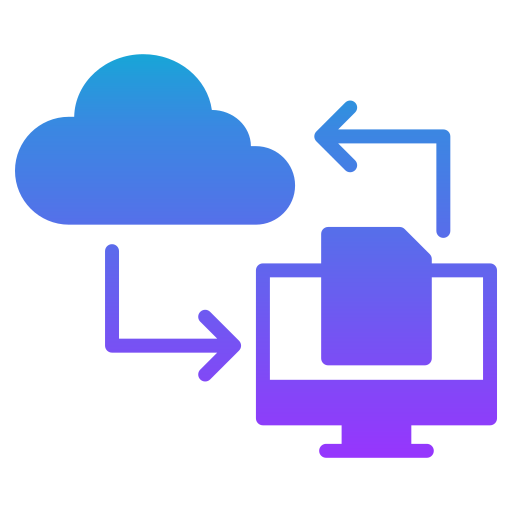

Versionz delivers integration services across interface architecture, source-to-target design, orchestration, monitoring, error handling, and operational ownership for cloud-connected environments.


Define API, workflow, messaging, and orchestration patterns that support clean system interaction.
Shape mappings, validations, transformations, and ownership expectations for reliable system-to-system exchange.
Make integrations visible and supportable with monitoring, retries, error handling, and clear ownership.
Add security, access, change control, and operational governance without increasing integration fragmentation.
We combine cloud delivery, operational thinking, governance, and Microsoft platform experience so the service remains usable after the first rollout.
Talk to a Consultant
We align decisions to delivery realities, support expectations, and risk tolerance.
Controls, access, and policy expectations stay visible from design through rollout.
Monitoring, support, release, and ownership concerns are addressed early.

We help teams evolve the service model as cloud usage and complexity grow.
Service Coverage
We support integration initiatives from architecture and source mapping through orchestration, monitoring, governance, and ongoing support readiness.
We move from current-state review to controlled rollout and optimization with visibility, governance, and operational readiness built into the approach.
Assess
Review the platform, dependencies, risks, and operational constraints.
Design
Shape the architecture, controls, workflow, and ownership approach.
Enable
Prepare environments, standards, and governance for rollout.
Operate
Align monitoring, release, support, and continuity expectations.
Improve
Refine the service model as delivery and platform needs evolve.
It can include API and interface strategy, source mapping, data movement design, orchestration, monitoring, governance, and support readiness.
Yes. The service model is designed to support related business, platform, integration, and operational workstreams.
We anchor the work to business priorities, delivery constraints, governance expectations, and operational readiness.
Yes. We can support optimization, enhancement planning, and continuous improvement after the initial rollout.
Next Step
