
The Evolution of D365 FO Reporting
Traditional reporting methods such as SSRS and BYOD often introduced delays and performance limitations. Modern businesses require faster insights, unified data access, and scalable analytics without impacting transactional workloads. Microsoft’s modern data platforms address these challenges by enabling near real-time data access, advanced analytics, and seamless integration with visualization tools.
Microsoft Fabric
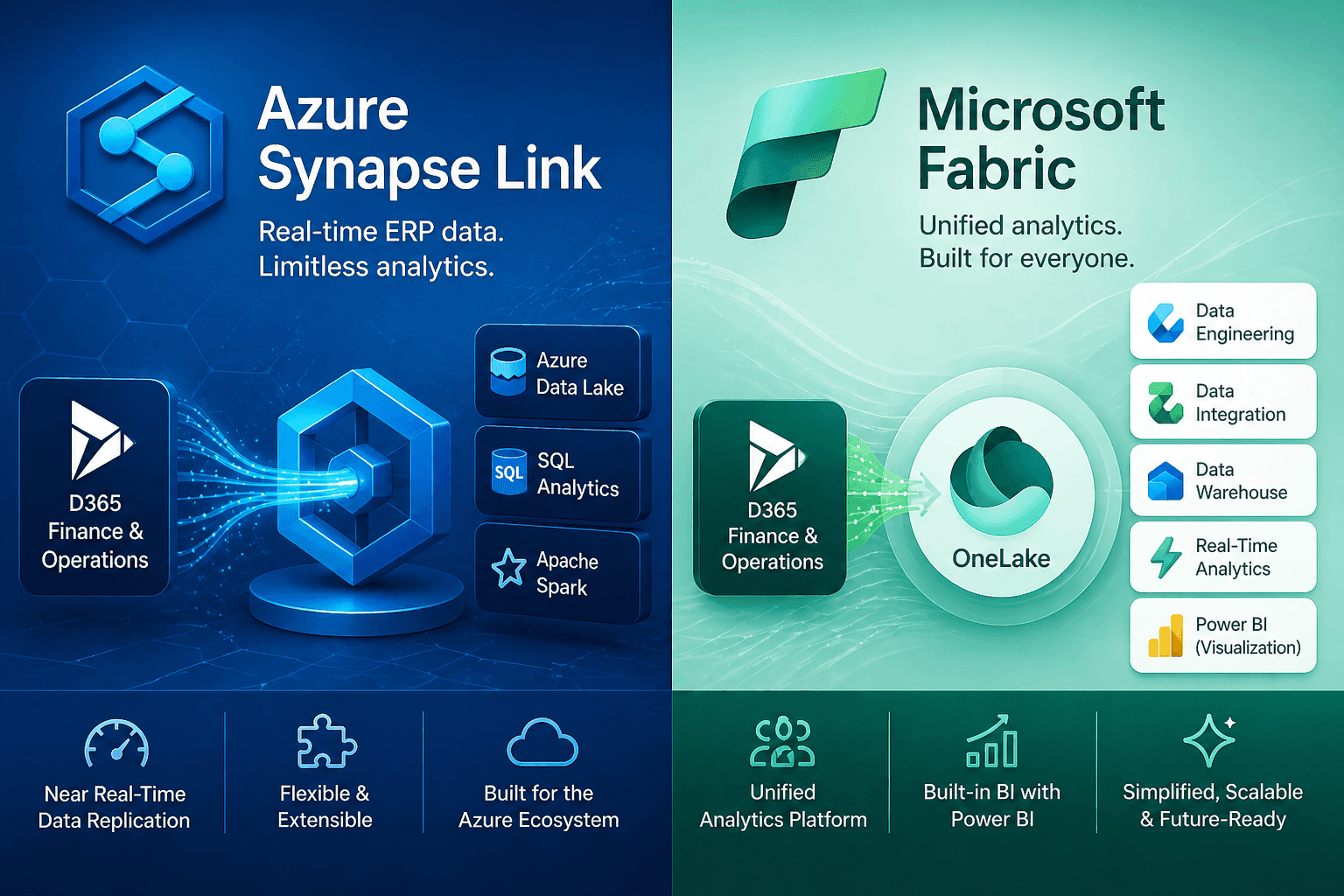
Microsoft Fabric is a unified, SaaS-based analytics platform that combines data engineering, data integration, data warehousing, and business intelligence into a single ecosystem. With Fabric, data from D365 FO is centralized in OneLake, transformed using built-in pipelines, and visualized directly through Power BI. This eliminates the need for managing multiple services and simplifies the overall architecture. Fabric is designed to make analytics accessible to both business users and technical teams, enabling faster insights and improved collaboration while supporting advanced analytics and AI capabilities.
Azure Synapse Link
Azure Synapse Link enables near real-time replication of D365 FO data into Azure Synapse Analytics. In this approach, data is continuously exported to Azure Data Lake, where it can be processed using SQL or Spark. This allows organizations to perform large-scale analytics without affecting the performance of the core ERP system. Synapse Link provides flexibility and control, making it suitable for organizations that require complex data transformations, custom pipelines, or integration with existing Azure-based data platforms.
Key Differences
Both options improve D365 FO reporting, but they differ in architecture, management model, and ideal use cases.
| Area | Microsoft Fabric | Azure Synapse Link |
|---|---|---|
| Platform model | Fully managed SaaS analytics platform | Azure-based replication and analytics architecture |
| Primary strength | Unified experience across engineering, warehousing, and BI | Flexible near real-time data replication into Azure services |
| Data storage | OneLake | Azure Data Lake |
| Reporting experience | Built-in Power BI alignment and integrated analytics workflows | Usually paired with additional services for reporting and modeling |
| Setup effort | Lower complexity with more native capabilities in one platform | Higher setup and management effort with more architectural control |
| Best fit | Organizations wanting a streamlined, low-code analytics stack | Teams with existing Azure investments and advanced engineering needs |
When to Choose Microsoft Fabric
Microsoft Fabric is a strong choice when organizations want a modern, simplified analytics platform with minimal infrastructure management. It is especially suitable for teams that rely heavily on Power BI and prefer an integrated, low-code environment for reporting and insights.
When to Choose Synapse Link
Azure Synapse Link is ideal for organizations that need near real-time data replication and have existing investments in Azure data services. It is best suited for scenarios that require advanced data engineering, large-scale processing, and full control over data architecture.
Microsoft’s Direction
Microsoft is increasingly positioning Microsoft Fabric as the future of analytics by offering a unified platform that simplifies data integration, analytics, and reporting. At the same time, Azure Synapse Link continues to play an important role for organizations that require flexibility and deep integration within the Azure ecosystem.
Conclusion
Both Microsoft Fabric and Synapse Link are powerful solutions for D365 FO reporting. Fabric simplifies analytics with an integrated, user-friendly platform, while Synapse Link provides flexibility and control for advanced scenarios. The right choice depends on your organization’s goals, technical capabilities, and long-term data strategy. By selecting the appropriate platform, you can transform your D365 FO data into meaningful insights that drive better business decisions.